
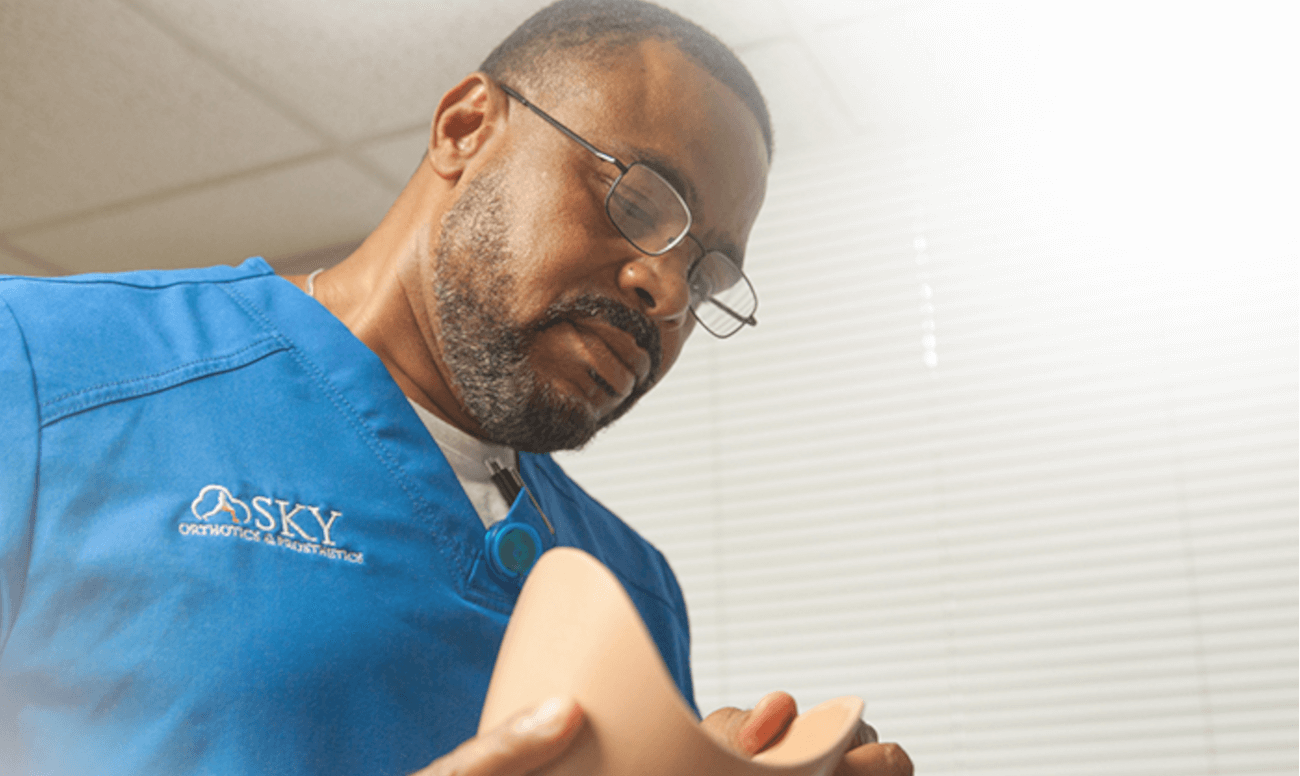
History proves that amputation is one of the oldest forms of surgical procedures. So, it would be correct to say that post amputation pain has been a challenging and agonizing experience for centuries. The fear of the unknown which may precede an amputation surgery, is quickly superseded by the stress of managing the consequent pain and finding a way to do it in the most effective, and responsible manner. According to an Oxford University study, “the burden of pain after amputation is therefore considerable, not just in the short term, but also in the years and decades after surgery. Severe post-amputation pains have been recorded in survivors from World War II, in some extreme cases, 50 years after loss of limb”. The most common sources of pain and discomfort are known as:

Phantom Limb Pain
According to the Mayo Clinic, Phantom limb pain feels like it’s coming from a body part that is no longer there. Doctors once believed this post-amputation phenomenon was a psychological problem, but experts now recognize that these sensations originate in the spinal cord and brain.

Treatment Options

  • Mirror Box device
  • Acupuncture
  • Spinal cord stimulation

Medications

  • Over the counter pain relievers
  • Antidepressants
  • Anticonvulsants
  • Codeine, or Morphine

Stump Pain
In a 1989 published article by the Department of Clinical Investigation, Fitzsimons Army Medical Center in Aurora, Colorado, Stump pain was proven to be the result of decreased blood flow in the residual limb, it is closely related, and much like phantom pain. Lingering stump problems such as scars, neuromas, or bone spurs can be a direct cause. According to the International Neuromodulation Society, both Stump and Phantom pain are interconnected. Stump pain occurs immediately after amputation and is an acute nociceptive pain which usually decreases after a few weeks once the wound heals. Although up 90% of amputees report recovery from Stump pain, a remaining 10% -15% may experience the pain lingering for a longer period.

Treatment Options

  • Ultrasound
  • Biofeedback
  • Relaxation techniques
  • Massage of the amputation area
  • Transcutaneous electrical nerve stimulation of the stump (TENS)

Medications

  • Beta-blockers
  • Muscle relaxers
  • Anti-inflammatory


Mechanical Pain
Mechanical pain is the general term that refers to any type of back pain. In the case of Mechanical pain in amputees, it is related or caused by other post amputation pains immediately after the procedure, in most cases it decreases within just a few months after the procedure.

Treatment

  • Nonsteroidal anti-inflammatory drugs such as ibuprofen or naproxen are available without prescription and may be used to reduce pain.
  • Stronger prescription pain relievers are rarely required.
  • Physical therapy may be necessary in rare cases.


Regardless of the cause for the amputation, pain management can be challenging, and it can become one of those obstacles along the journey which can be conquered with the right support network. A united effort to deal with such challenges begins with the hospital doctors and nurses, the follow up doctor visits, and ultimately with a caring medial group. Even a prothesis clinic with a strong supportive culture can become a part of this network of solutions.

No pain management treatment decisions should be made without the consultation of your primary doctor who understands your specific needs. Individuals may experience differences in their recovery process. Since your body and your needs are unique, the customization of all treatments from amputation, to pain management and prothesis adaptation are key.

Matter worldwide the physiotherapy community is divide by name, with three different toprimary titles used physiotherapy, physical therapy and kinesiotherapy. Notwithstanding, that within the term physiotherapist, there are also language derivations such as fisio, fisicos, fysio and fiso. Finding a single word to describe the community is always going to be difficult. there are also language derivations such as fisio, fisico, fysio and fiso. Finding a single word to describe the community is always going to be difficult. World Physiotherapy is a health care profession concerned with human function and movement and maximising physical potential. wound care and electromyography.

“The body has incredible potential, but it’s individuals to tap into that potential through hard work and belief in themselves.”Natalie Jones– manager

There are also language derivations such as fisio, fisico, fysio and fiso. Finding a single word to describe the community to be difficult. Concerned with human function and movement and maximising physical potential.

Morden Strategy for Your Security

Physicians like Hippocrates and later Galen are believed to have been the first practitioners of physical therapy, advocating massage, manual therapy techniques and hydrotherapy to treat people in 460 BC. Development of orthopedics century, the Gymnasticon exercise of the joints, similar physical therapy.
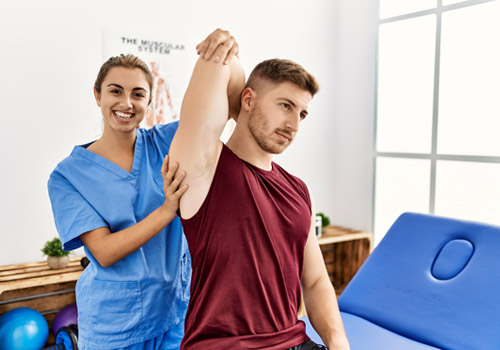
  • Neck and back pain caused by problems in the muscles and skeleton
  • Pelvic issues, such as bladder and bowel problems related to childbirth.
  • Loss of mobility because of trauma to the brain or spine, or due to diseases such as.
  • Fatigue, pain, swelling, stiffness and loss of muscle strength, for example during cancer.

Capable of operating in both normal and poorly lit environments, these cameras benefit from not requiring a inbuilt infrared illuminators as they can capture clear video images extra sensitive imaging chips.